
Diarrhea that won't quit. That's the top complaint in a growing outbreak spreading across the country this summer and the cause is a tiny parasite called Cyclospora. As of mid-July, it has made thousands of people sick in more than 30 states. In this article we cover what the parasite does inside your body, how doctors treat it, and where to go for care using our Guide to Care.
Where things stand right now
The CDC has confirmed 6,707 cases since May 1, spanning across more than 30 states. Health officials are also checking more than 11,500 additional reported illnesses, with 98 hospitalizations and no deaths reported in the confirmed outbreak. Michigan's own health department has logged more than 9,600 cases. State counts often run ahead of the national count, since it takes time to confirm each case. According to health officials, the source has been identified as iceberg lettuce from Taylor Farms de Mexico, which was recalled on July 17. Don't worry, Cyclospora shows up almost every year between May and August, but this year's total is already more than twenty-five times higher than the same point last year.
Reported cases by state. Hover or tap a state for its case count.
Number of cases
- 1 to 49
- 50 to 199
- 200 to 499
- 500 to 999
- 1,000 to 4,000
- No reported cases
Ranges reflect the case counts shown on the source surveillance map.
What is Cyclospora?
Cyclospora cayetanensis is a single-celled parasite. It's too small to see without a microscope. Once swallowed, it settles into your small intestine and causes trouble there. It isn't a virus or a bacteria. It belongs to a group called protozoa. That's the same family as the parasite behind giardia.
How you catch it
The illness this parasite causes is called cyclosporiasis. You catch it by eating food or drinking water contaminated with feces. That feces carries the parasite's eggs, known as oocysts. Past U.S. outbreaks have been traced to raspberries, cilantro, basil, snow peas, and lettuce. Fresh produce eaten raw is the common culprit.
One detail most coverage of this outbreak leaves out is that those eggs aren't contagious the moment they leave a person's body. The CDC says they need one to two weeks outside the body first. Only then can they make someone else sick. That's why cyclosporiasis almost never spreads between people, even in the same house and it's also why regular chlorine treatment of water doesn't reliably kill it.
Symptoms to watch for
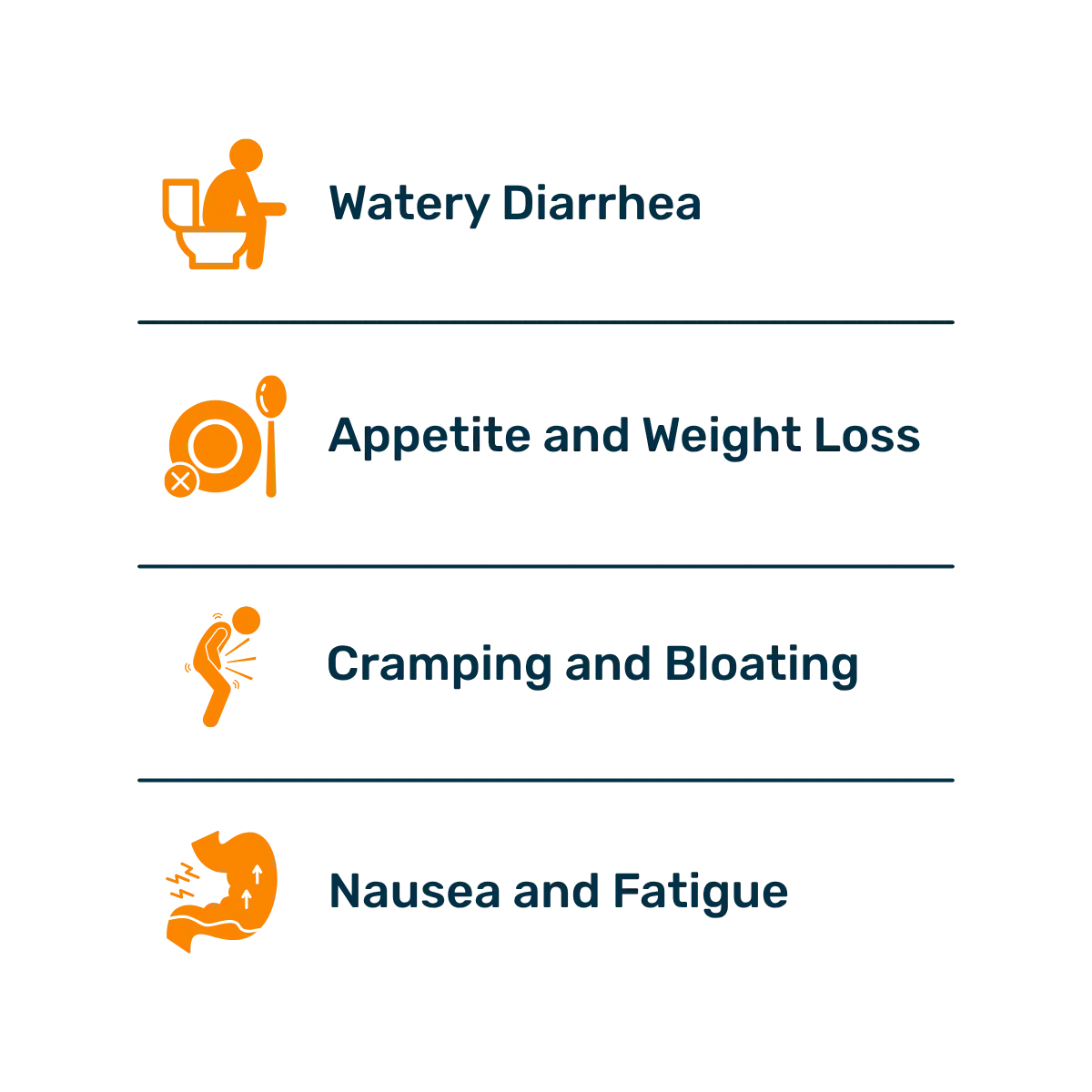
Symptoms usually start about a week after exposure. It can take as little as two days, or as long as two weeks or more. The most common signs are:
- Watery diarrhea, often frequent
- Loss of appetite and weight loss
- Cramping, bloating, and gas
- Nausea and fatigue
Vomiting, body aches, headaches, and a low fever show up less often.
Left untreated, symptoms can last a few days. Sometimes they last a month or longer. Diarrhea sometimes fades, then comes back. Fatigue can linger even after the stomach symptoms clear up. You can use our free symptom checker here to see if you might have it.
Getting diagnosed
Call a healthcare provider if your diarrhea lasts more than a couple of days. Cyclospora doesn't show up on the standard stool tests most labs run for diarrhea, so a provider has to specifically request testing for it. Even then, one test can miss it. The parasite sheds in an on-and-off pattern. Health departments recommend three stool samples over about ten days, roughly every other day, to catch it. If your first test comes back negative but symptoms continue, ask about repeat testing.
Treatment
Once diagnosed, doctors treat cyclosporiasis with an antibiotic combo called trimethoprim-sulfamethoxazole. You may know it by the brand name Bactrim or Septra. The standard adult dose is one double-strength tablet, twice a day. Treatment lasts seven to ten days. For people with sulfa allergies a doctor can instead prescribe a drug called nitazoxanide instead.
Where to get care
Not every case needs the same level of care. Here's how it breaks down, using our Guide to Care:

Telehealth
Telehealth works well for straightforward diarrhea and stomach upset with no other red flags. It's available around the clock. A provider can start ordering the right stool test, all without you leaving home.
Your primary care doctor
Your primary care doctor is the better call if symptoms last more than a few days. They already know your health history. That makes it easier for them to manage your testing and follow-up.
Urgent care
Urgent care makes sense if diarrhea comes with vomiting. It also works if you feel run down or dehydrated and want same-day care. You can walk in, no appointment needed. Urgent care can also give IV fluids if you need them.
The emergency room
The emergency room, or a call to 911, is for danger signs like:
- Little or no urination
- Dizziness or fainting when you stand up
- A racing heart or extreme thirst
- Confusion or a high fever
- Blood in your stool
Get help right away if you see these signs. This is especially true for young children, older adults, pregnant people, and anyone with a weakened immune system.
How to lower your risk
There's no way to fully cyclospora-proof your produce. Ordinary washing doesn't remove every egg. These habits still help:
- Wash your hands before and after handling fresh fruits and vegetables.
- Rinse produce under running water before you eat, cut, or cook it. Do this even if the package says "pre-washed."
- Scrub firm produce like melons and cucumbers with a clean brush.
- Refrigerate cut or peeled produce within two hours.
- Cook food thoroughly. Heat above 158°F kills the parasite.

The bottom line
Cyclosporiasis is miserable. But it's rarely dangerous, and it's treatable once it's correctly diagnosed. The biggest hurdle is usually just getting the right test ordered. If you've had watery diarrhea for more than a few days, don't wait it out. Start with telehealth or your doctor and save the ER for last.
Sources
This site does not provide medical advice. The information on Find the Right Care is for general educational purposes only and is not a substitute for professional medical advice, diagnosis, or treatment. Always talk to your doctor or another qualified health provider with any questions about a medical condition.
If you think you may have a medical emergency, call 911 or go to the nearest emergency room immediately. Do not delay seeking care because of something you read here.