
Know what your care options are before you need them!
Deciding where to get help when you or someone in your family is sick or hurting can be confusing. Finding care when you need it can help speed up your recovery and save time and money.
Simple 24/7 access to a doctor using a smartphone or computer. Get quick diagnosis and treatment options for minor problems.
A walk-in visit to a nurse practitioner or physician assistant seven days a week in a retail or drugstore. Get quick diagnosis and treatment options for minor problems.
Your Primary Care Physician (PCP) is your family doctor. They’re often supported by a care team that can include a Physician Assistant (PA) and a Nurse Practitioner (NP). PCPs have access to your medical records, understand your past conditions, and can better diagnose your symptoms. You need to make an appointment to see them.
Located in a hospital and open 24/7, 365 days a year. This department is where you will get care for serious illnesses and injuries.
A medical clinic staffed by doctors, nurse practitioners, and physician assistants who provide quick treatment for illnesses and injuries that are not life-threatening. Walk-in without an appointment seven days a week, usually with short wait times.
A newer care option, these are freestanding emergency rooms but are not a part of a hospital. They offer many of the same services as a hospital emergency room and are often more expensive.

Primary Care
Primary care provides comprehensive, ongoing healthcare from a trusted provider who handles everything from routine checkups and preventive care to managing chronic conditions and coordinating referrals.

Speciality Care
Specialty care involves focused, advanced treatment by experts with specialized training in specific medical fields like cardiology or surgery, typically accessed through referrals for complex conditions.
Leapfrog Hospital Safety Grade
Making informed healthcare choices helps keep you safe, improves the quality of your care, and can lower your overall costs.
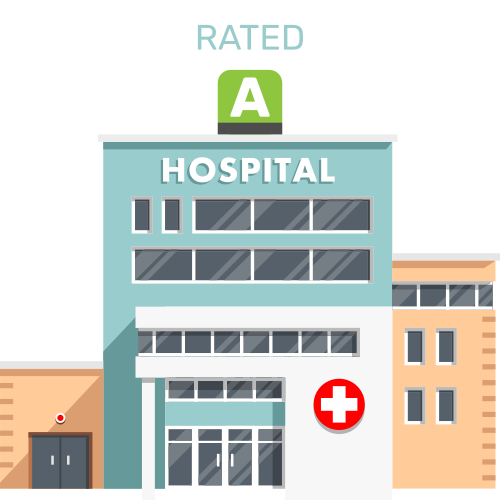
Is your local hospital safe? The Leapfrog Hospital Safety Grade gives hospitals a single letter grade based on how well they protect patients from mistakes, injuries, and infections. Use this information to decide which hospital is right for you.
Safety Guide Videos
Navigating
your
Health?
Get Answers
Here!
Sign up and let us guide you with trusted resources to help you understand your symptoms, find prescription savings, and connect with a supportive health community.