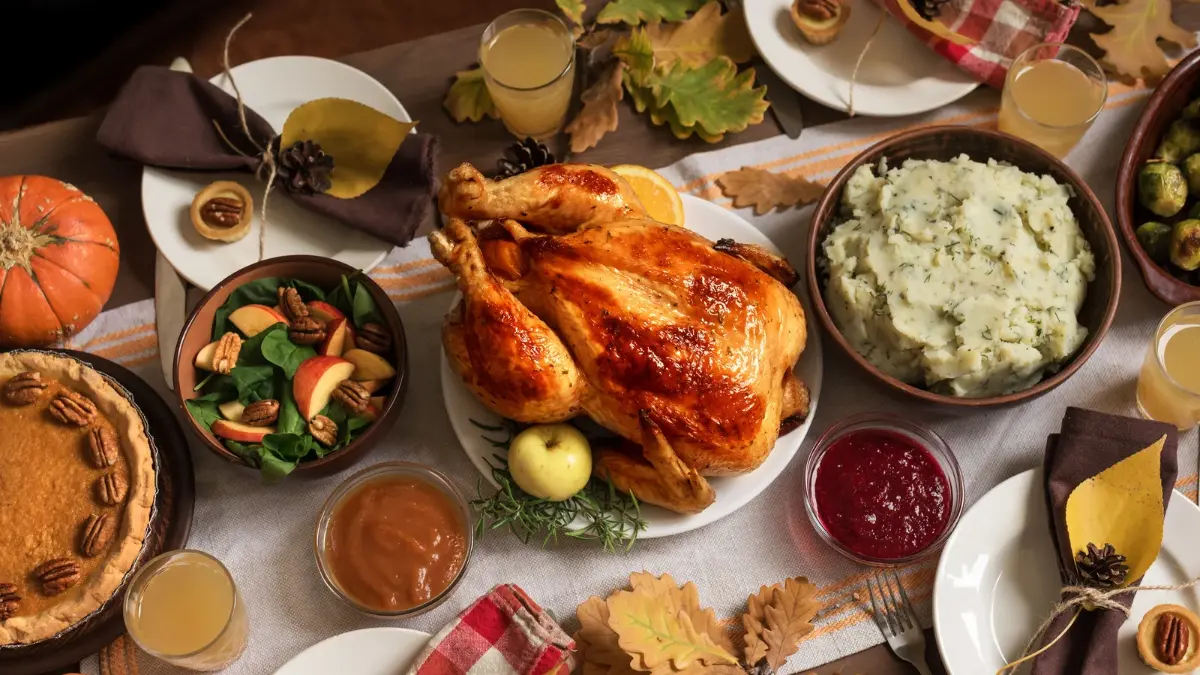
The turkey comes out golden, the stuffing smells incredible, and everyone is ready to eat. But looks and smell cannot tell you whether the turkey is safely cooked. The choices that protect your meal start before you even put the bird in the oven and continue when you put the leftovers away.
Here is a simple food safety plan for before, during, and after Thanksgiving dinner, including how long to thaw a turkey.
Before dinner: How to thaw a turkey and prep it safely
How long to thaw a turkey: fridge, cold water, and microwave
To give your turkey enough time to thaw in the refrigerator, plan one full day for every four pounds. For a 16-pound turkey, start four days before cooking. For a 20-pound turkey, start five days before. Keep it in its wrapper, set it in a pan on a low shelf so juices cannot drip onto other food.
Running behind? The CDC describes two faster options: cold water and the microwave.
For cold-water thawing, seal the turkey in a leakproof bag, change the water every 30 minutes, and allow 30 minutes per pound. Cook it immediately after thawing.
If using a microwave, follow the appliance instructions and cook the turkey immediately afterward. Never thaw turkey on the counter. The outside can warm enough for germs to grow while the center is still frozen.
Should you wash a turkey before cooking?
You may have grown up watching someone wash the turkey in the sink. The CDC advises against it. Rinsing can splash germs onto the sink, counters, and nearby food. Cooking to the right temperature makes the turkey safe; washing does not.
Keep raw turkey away from other foods
Before preparing the meal, clear space for separate cutting boards and utensils. Keep raw turkey and its juices away from foods that will be served without further cooking, such as salad or rolls. Wash your hands after handling raw poultry, and wash the surfaces and tools it touched.
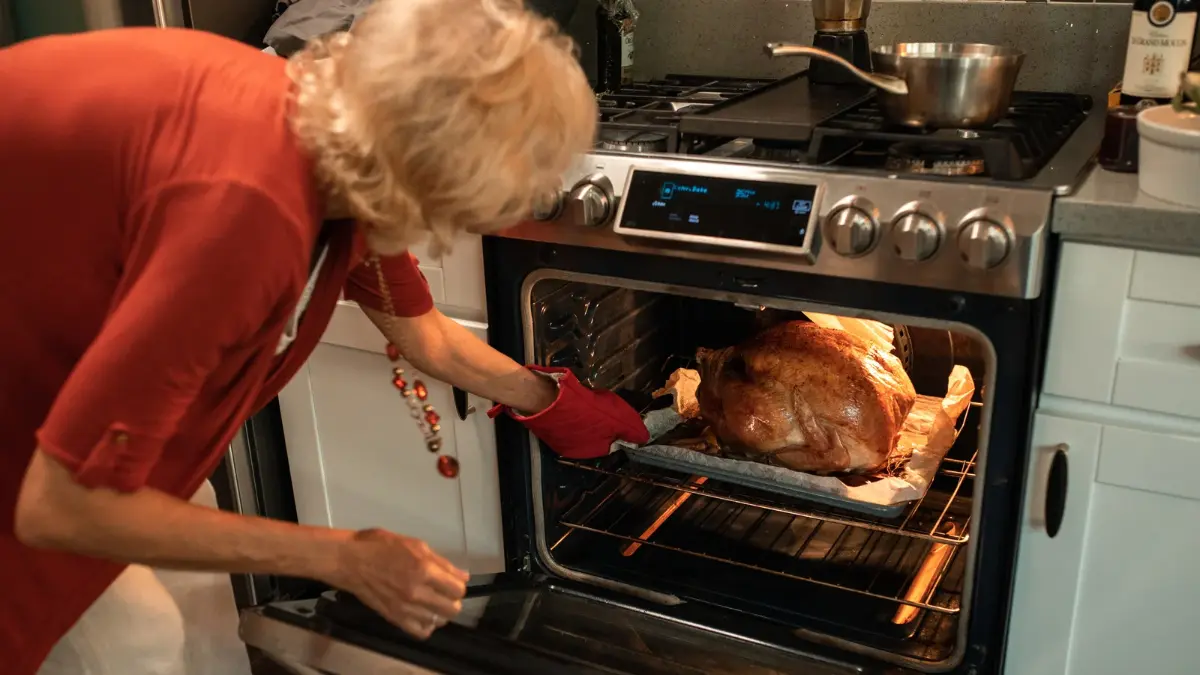
During cooking: What should the internal temperature of a turkey and stuffing be?
A golden-brown bird or a pop-up timer cannot tell you everything you need to know. Use a food thermometer to check that turkey reaches 165°F. Test the thickest part of the breast and the innermost parts of the thigh and wing, without touching bone. If you are making stuffing, its center must also reach 165°F. Cooking stuffing in a separate dish makes it easier to check.
If you are serving a buffet, think about time as well as temperature. Bring out cold dishes when people are ready to eat rather than leaving them on the table throughout the afternoon. Keep hot foods at 140°F or above, and plan where the leftovers will go before the meal begins.
After dinner: How long can turkey and leftovers sit out?
Do not leave turkey, stuffing, gravy, or other perishable foods at room temperature for more than two hours. There is no need to wait for a large pot or platter to cool on the counter. Divide food into smaller, shallow containers so it cools faster in the refrigerator. Keep the refrigerator at 40°F or colder.
Thanksgiving leftovers do not last indefinitely in the fridge. Eat or freeze leftover turkey, stuffing, and other cooked dishes within four days. When you serve leftovers again, reheat them to 165°F. Label containers with the date so you know when each dish was made.
If someone becomes sick after a holiday meal, symptoms such as diarrhea, vomiting, or stomach cramps can have many causes. Find the Right Care’s Guide to Care can help you think through where to seek help. Contact a healthcare provider if you are concerned, especially when symptoms are severe or the person is more vulnerable to foodborne illness.
A quick Thanksgiving food safety checklist
Before the doorbell rings, ask yourself:
- Is the turkey thawing in the refrigerator, cold water, or microwave rather than on the counter?
- Are raw turkey juices separated from ready-to-eat foods?
- Is a food thermometer ready for the turkey and stuffing?
- Do I have shallow containers and refrigerator space for leftovers?
You do not need a perfect kitchen to serve a safer meal. Plan the thaw, check the temperature, and make room for leftovers. Then you can spend more time enjoying the people at your table.
Sources
This site does not provide medical advice. The information on Find the Right Care is for general educational purposes only and is not a substitute for professional medical advice, diagnosis, or treatment. Always talk to your doctor or another qualified health provider with any questions about a medical condition.
If you think you may have a medical emergency, call 911 or go to the nearest emergency room immediately. Do not delay seeking care because of something you read here.