
The costumes are off, the candy bag is on the kitchen table, and your child is already reaching for another piece. Do you say yes? Set a limit? Hide the bag? Halloween candy can turn a fun night into a negotiation before anyone has taken off their shoes. And by the next morning, you may be wondering what to do with leftover Halloween candy that could last for weeks.
This guide covers both questions: how much candy is reasonable for kids, and how to handle the pile that is left over without daily battles.
How Much Halloween Candy Is Too Much for Kids?
There is no magic number of pieces that works for every child. Age, appetite, health needs, and the rest of the day all matter. A more useful question is: What plan lets your family enjoy the holiday and get back to its usual routine afterward?
Still, a little context helps. The American Heart Association recommends that children ages 2 to 18 have less than 25 grams of added sugar a day, or about 6 teaspoons. It also advises no added sugar for children under 2. Since most candy is mostly sugar, a handful of fun-size pieces can reach that amount quickly.
That does not mean Halloween needs a strict count. One night of extra treats will not undo healthy habits. Instead, what matters most is how candy fits into the days and weeks that follow.
Make a Halloween Candy Plan Before Trick-or-Treating
Talk about candy before trick-or-treating, when everyone is calm. Explain that you will check the treats together once you get home, that your child can choose some favorites, and that the rest will be put away for later. Ask what feels exciting to them about Halloween. The costume, friends, and neighborhood walk may matter as much as the candy.
Keep the plan simple enough to remember. “We’ll pick a few favorites tonight and save the rest for after meals this week” is easier to follow than a complicated counting system. The American Academy of Pediatrics advises keeping candy rules realistic, consistent, and positive. If your child is old enough, let them help make the plan.
Halloween Night: Check the Candy, Then Let Kids Enjoy It
Before heading out, serve a regular meal or snack. A hungry child facing a mountain of candy has a harder time slowing down. When you get home, look through the bag together and set aside anything unwrapped, spoiled, or unsafe for your child. Then give them time to enjoy the treats you agreed on.
Try to skip comments about being “good” or “bad” for eating candy. Candy is food, not a test of character. You can be clear about the family plan without turning every bite into a debate. If your child asks for more, acknowledge the disappointment: “I know you wish you could keep going. We’ll choose more tomorrow.” Then move on to another activity.
If the evening does not go exactly as planned, you can reset tomorrow. One exciting night does not define your child’s eating habits for life.
What to Do With Leftover Halloween Candy
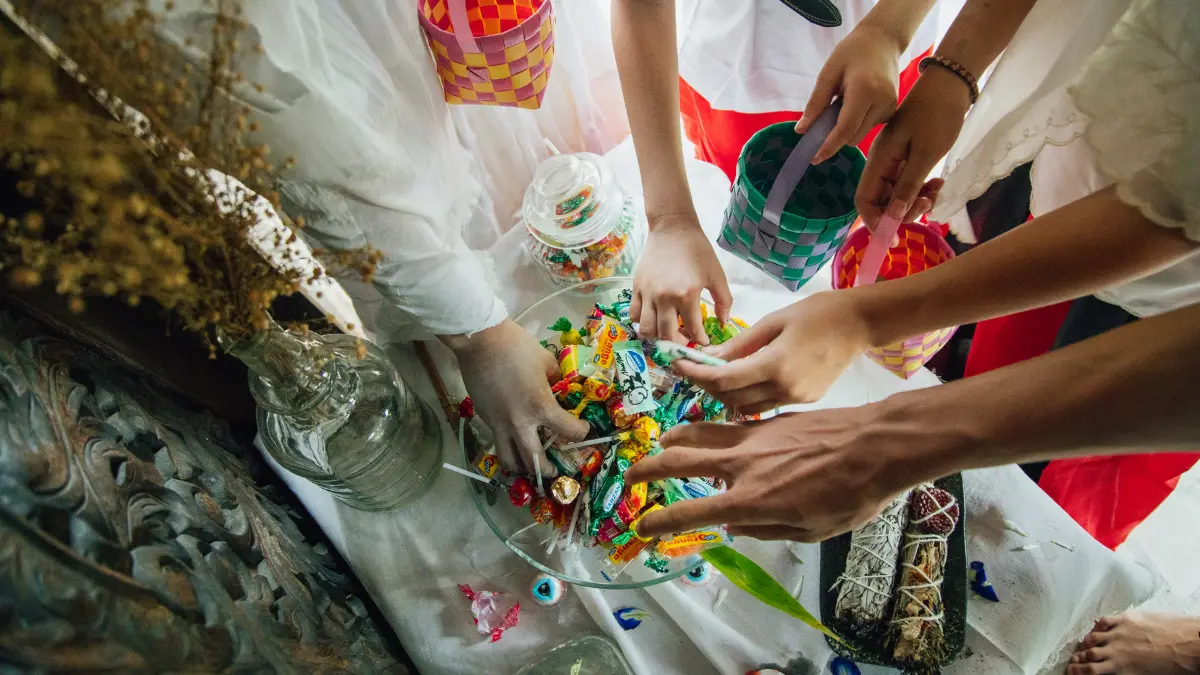
The days after Halloween often bring more friction than Halloween itself. A few simple habits can make leftover Halloween candy much easier to manage.
Put the Candy Away and Pick a Treat Time
Enjoy Sweets With Meals to Protect Teeth
For teeth, timing matters. The American Dental Association suggests enjoying sweets with meals or soon afterward instead of grazing on them throughout the day. Saliva produced during meals helps wash away food and acids. Keep brushing and flossing routines in place. These small habits are more manageable than trying to make every piece disappear overnight.
Don’t Use Candy as a Reward or Punishment
Avoid making candy a prize for finishing dinner or a punishment you take away for unrelated behavior. That gives the candy more power than it needs. If relatives or caregivers are involved, share the plan so children hear one calm message instead of several competing rules.
Where to Donate Leftover Halloween Candy
Giving away extra candy is often easier than eating through it. Let your child pick their favorites first, then decide together what to share. Many kids feel proud to help someone else. Here are a few places to start:
- Military care packages: Operation Gratitude collects wrapped candy for care packages sent to deployed troops, veterans, and first responders. In past years, it has asked for individually wrapped, factory-sealed, fun-size candy. Check its website for this year’s rules and mailing deadline.
- Candy buy-back events: Some dental offices buy back Halloween candy after the holiday and pass it on to troops or local charities. Ask your child’s dentist or search for a candy buy-back near you.
- Local shelters, food pantries, and senior centers: Call first, because many have rules about the kinds of donated food they can accept.
Halloween Candy Safety for Toddlers and Kids With Food Allergies
A toddler’s Halloween bag needs an adult safety check. Hard candies, gum, gummies, popcorn, nuts, and small candies can be choking hazards for babies and toddlers. If your child has a food allergy, read each label, even when a treat looks familiar. Offer a safe treat or a nonfood surprise so they can join the fun.
Leftover Halloween Candy FAQs
Where can I donate leftover Halloween candy?
Groups such as Operation Gratitude collect wrapped candy for troops and first responders. Some dental offices also host candy buy-backs. Local shelters and food pantries may accept candy, but call first.
How much candy should a child eat in a day?
There is no set number of pieces. For context, the American Heart Association recommends less than 25 grams (about 6 teaspoons) of added sugar a day for children ages 2 to 18.
Can you freeze Halloween candy?
Some candy freezes well. According to Hackensack Meridian Health, toffee and truffles can be frozen for up to two months. Avoid freezing candies that contain fruit or nuts.
The Bottom Line on Kids and Halloween Candy
Sources
Sources: The American Journal of Managed Care American Heart Association Calls for Sharp Limits on Sugar for Kids, HealthyChildren.org (American Academy of Pediatrics) Halloween Fun & Safety Tips for Kids of All Ages, MouthHealthy (American Dental Association) Halloween Survival Guide, Hackensack Meridian Health Can Halloween Candy Go Bad?, Operation Gratitude Saying Thank You to All Who Serve, Food Allergy Research & Education Teal Pumpkin Project
This site does not provide medical advice. The information on Find the Right Care is for general educational purposes only and is not a substitute for professional medical advice, diagnosis, or treatment. Always talk to your doctor or another qualified health provider with any questions about a medical condition.
If you think you may have a medical emergency, call 911 or go to the nearest emergency room immediately. Do not delay seeking care because of something you read here.